Project-Based Learning Takes Center Stage at Bay Area K-16 Steering Committee
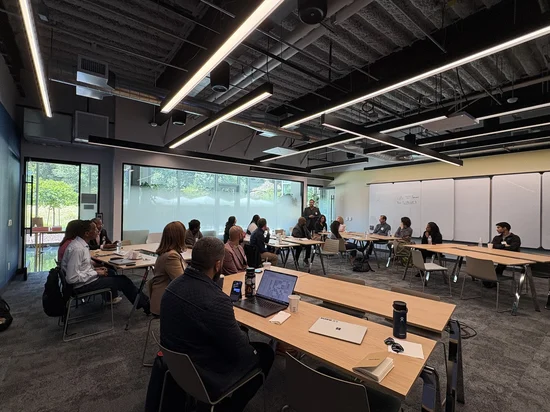
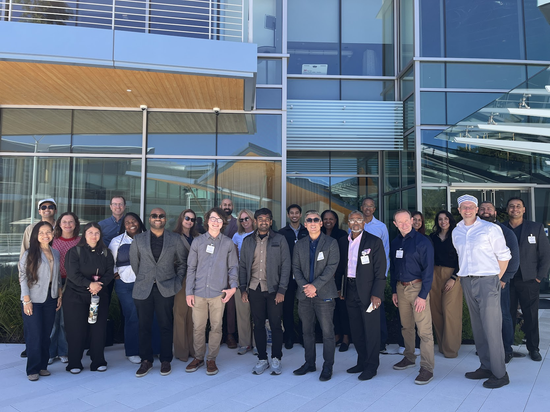
On May 15th, the Bay Area K-16 Collaborative convened its Steering Committee at the JP Morgan Chase Technology Center. Bringing together 30 employers, educators, workforce leaders, and community partners, the Collaborative is moving deeper into implementation following 2 years of regional partnership-building and pilot testing. The meeting focused on one central question: how do we scale high impact, career-connected learning across the Bay Area?
Hosted by representatives from the Silicon Valley Leadership Group (SVLG), SVLG Foundation, JPMorganChase, and the Bay Area K-16 Collaborative, the convening brought together leaders from K-12, community college, and university education to connect with industry spanning the fields of semiconductors, healthcare, advanced manufacturing, energy, finance, and technology. Participants kicked off by celebrating major regional accomplishments, including the Stanford Health Care Innovation Project (SHIP), Texas Instruments’ middle school rover curriculum and Industry Day, Lucid Motors and Lumentum workforce exploration events, and collaborative-wide PBL webinars. On the horizon, Synopsys revealed their emerging semiconductor chip design program that will be co-created with educators and offered in the Fall for two dual enrolled community college cohorts.
Across these efforts, a clear pattern emerged: project-based learning provides one of the strongest and most scalable models for employer engagement.
Unlike traditional internship models that often require significant funding and have limited student capacity, project-based learning allows employers to engage students through structured academic experiences embedded directly into coursework. Employers can contribute industry-informed challenges, mentorship, professional development, and technical guidance, without needing to create internship infrastructures from scratch. For educators, PBL offers a mechanism to align curriculum with authentic workplace applications and expectations.
Most importantly, students benefit in unparalleled ways. Through PBL, students develop technical competencies alongside critical-thinking, communication, and collaboration, while engaging with industry-relevant content over an academic term. The model expands access to career-connected learning because participation is integrated directly into the school day.
During structured breakout discussions, industry partners surfaced important questions around ownership during project development and tailoring dense programs to student capacity. Educators emphasized the need for scalable frameworks that simplify implementation while preserving opportunities for creativity and feedback. Participants also discussed how skills-based volunteering, startup externships, and affinity-based mentorship models can further strengthen pathways into industry.
A key theme throughout the day was that successful project-based learning depends both on strong curriculum and coordinated regional infrastructure. Steering Committee members discussed the importance of creating reusable project models, building faculty support systems, establishing clear pathways for employer participation, and ensuring programs remain responsive to workforce trends and student needs. The convening concluded with strong alignment around continuing to expand project-based learning and career preparation efforts across the region.
For employers, the Bay Area K-16 Collaborative offers proven engagement models, direct access to student cohorts, and opportunities to build long-term talent pipelines through sustained educational partnerships. For educators, the Collaborative provides frameworks for integrating industry-aligned learning into coursework while strengthening institutional relationships with employers and exposing students to emerging career pathways.
As the Bay Area K-16 Collaborative enters its next phase, the Steering Committee reinforced a shared vision: preparing the future workforce requires deeper, more coordinated partnerships between education and industry — and project-based learning is proving to be one of the most effective ways to bring that vision to life.